DHL-Campus, Schkeuditz
Rubin 65 GmbH
Owner / Developer
Stadtbau Leipzig AG
Architect
Architektur von Domaros GmbH
Building Function
Car park, Office
Status
Completed 09/2023
approx. 2.200 m²
Height
approx. 17 m
Technical Features
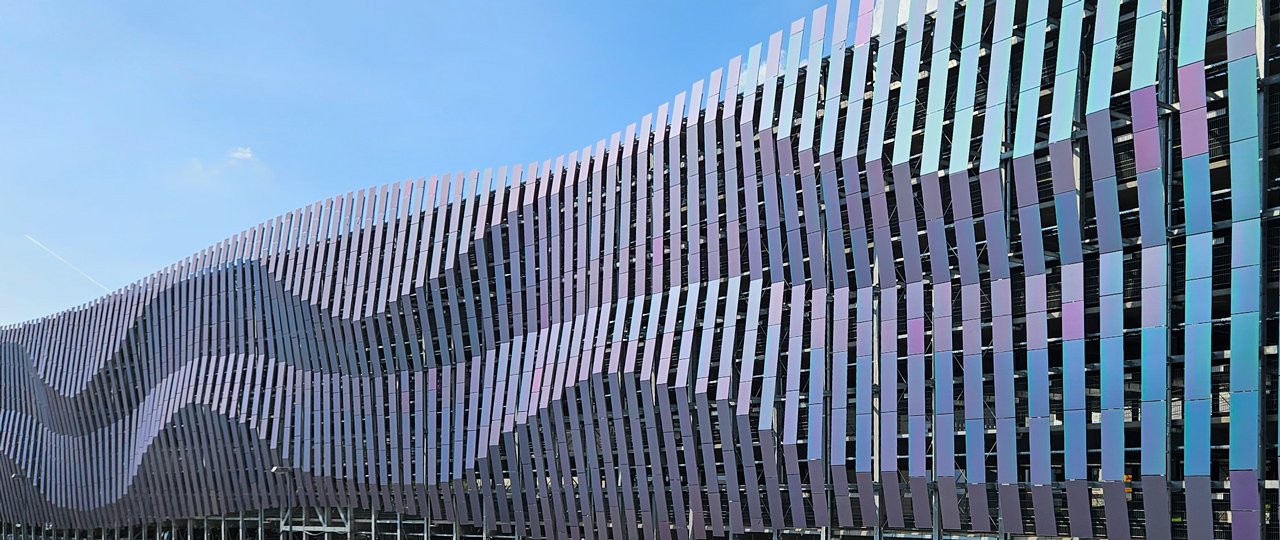
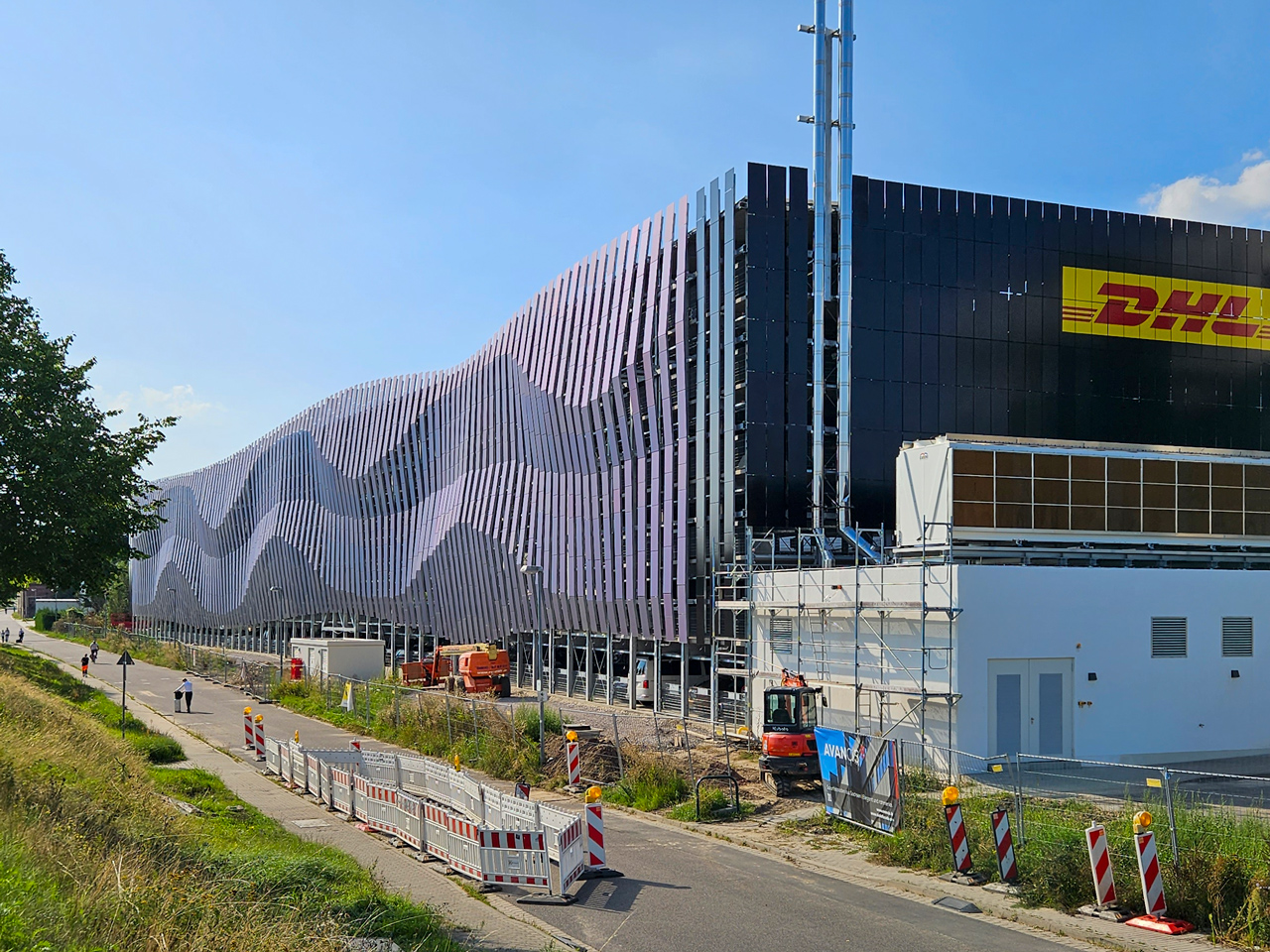
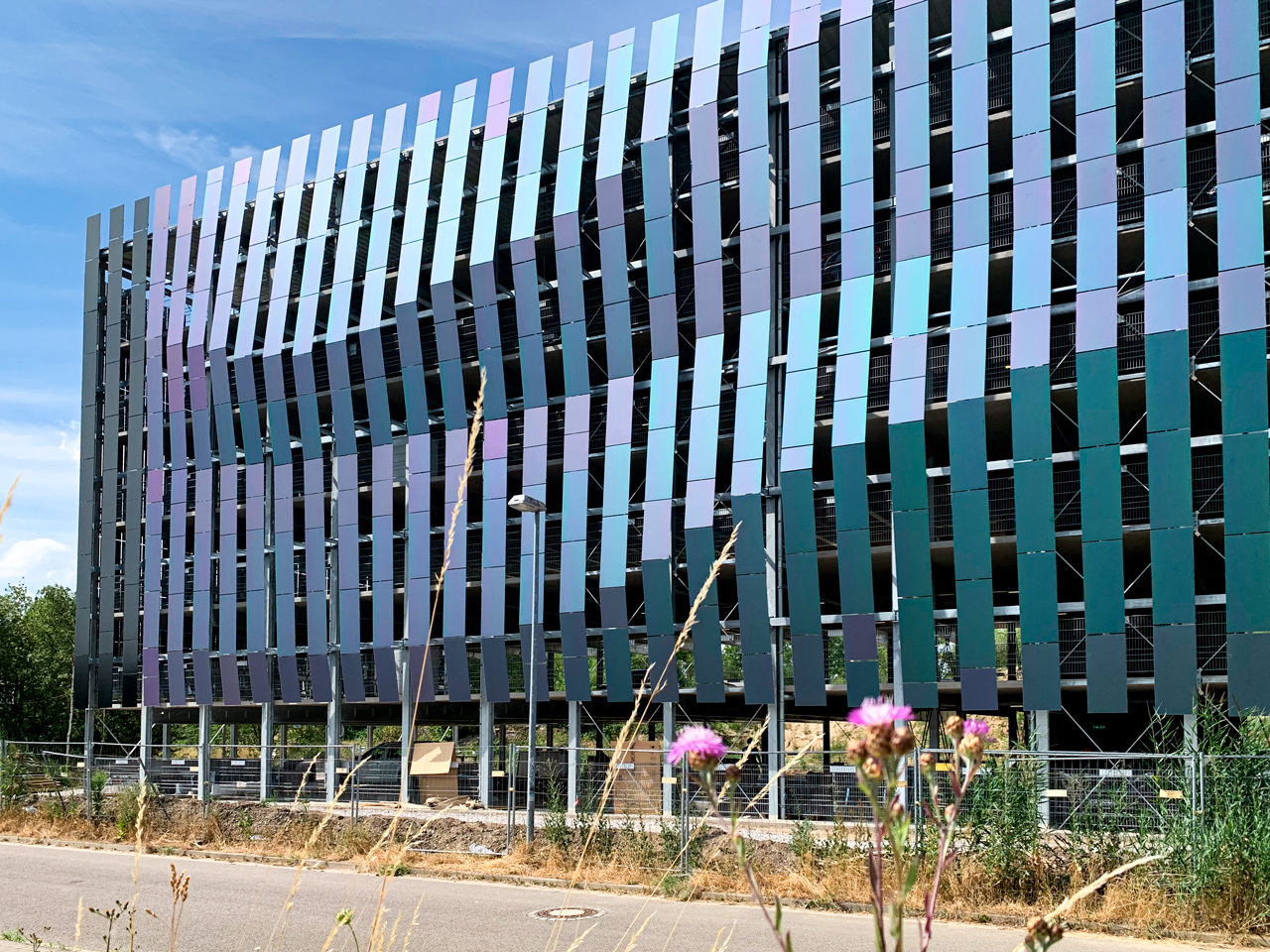
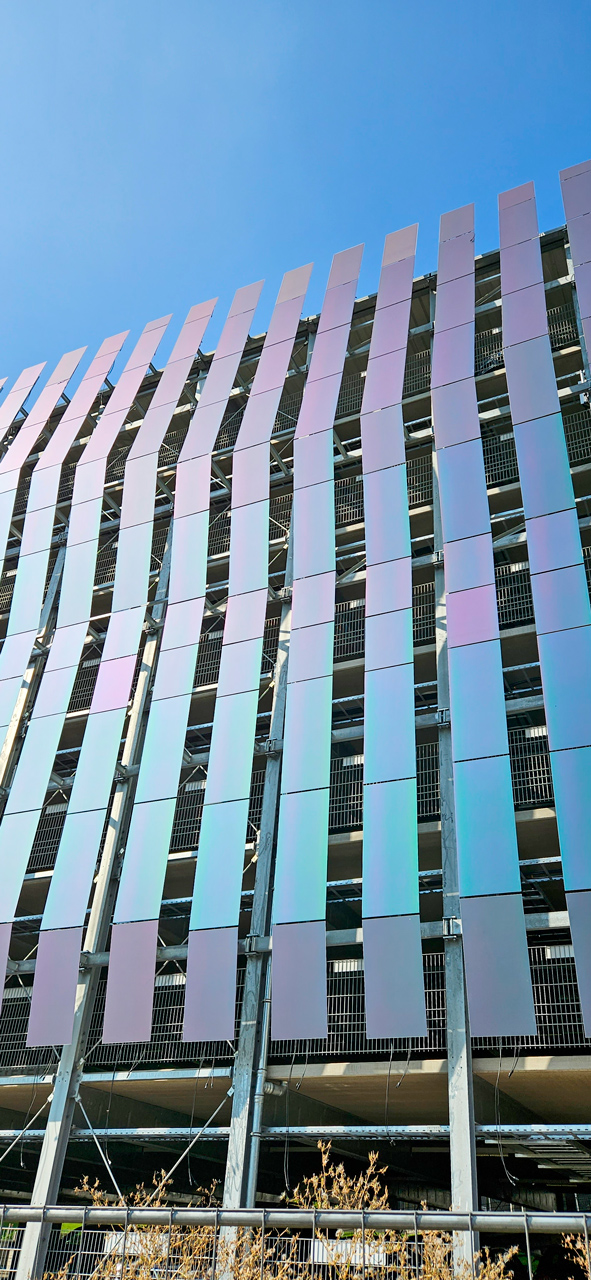
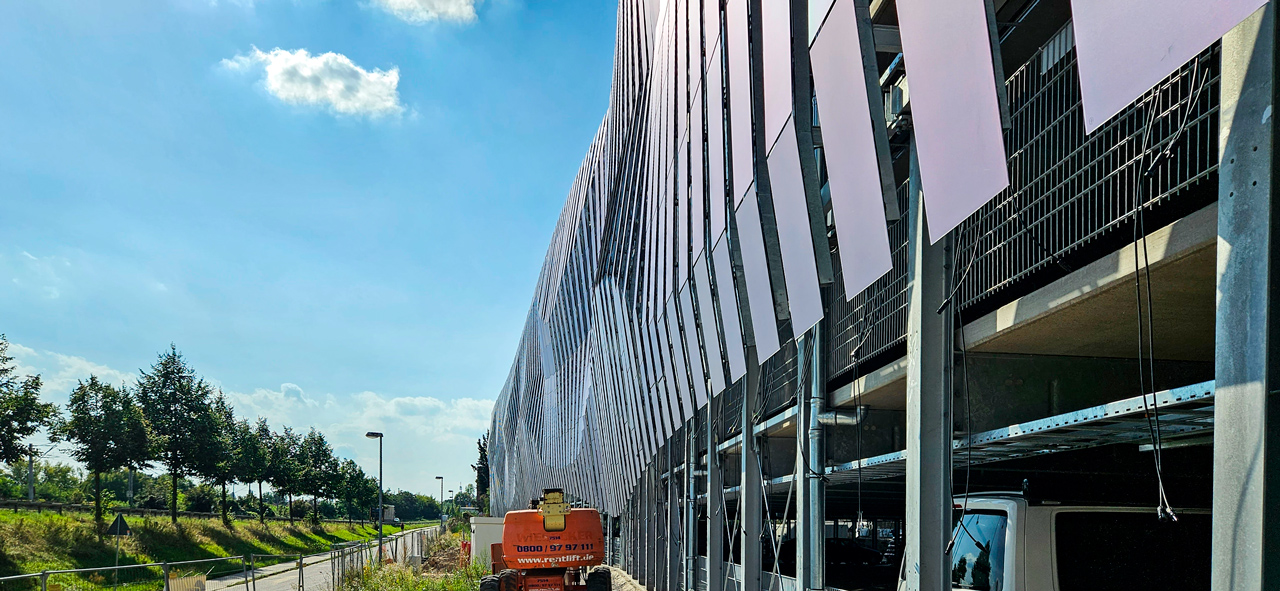
- Facade perceives a spatially-acting wave
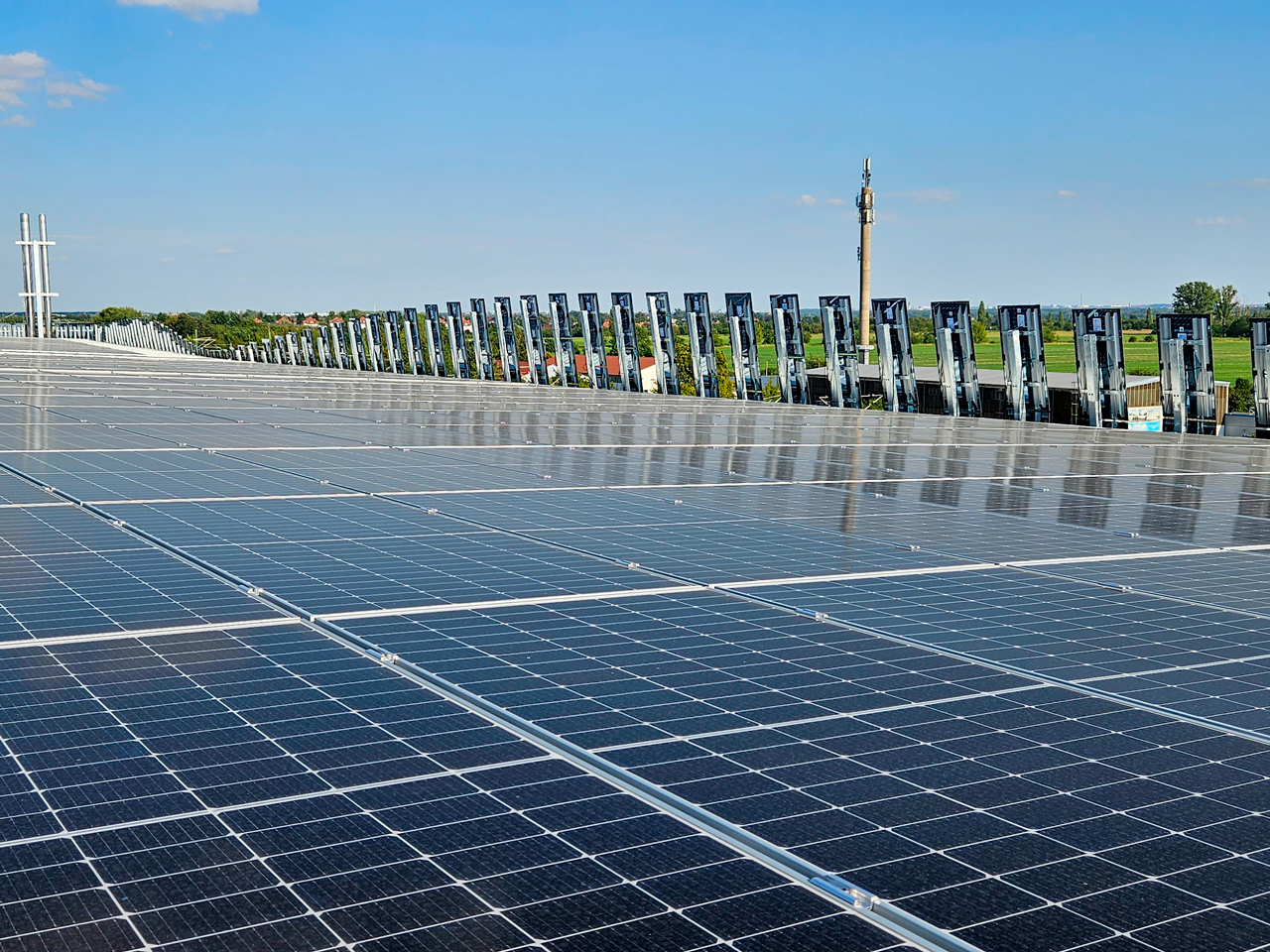
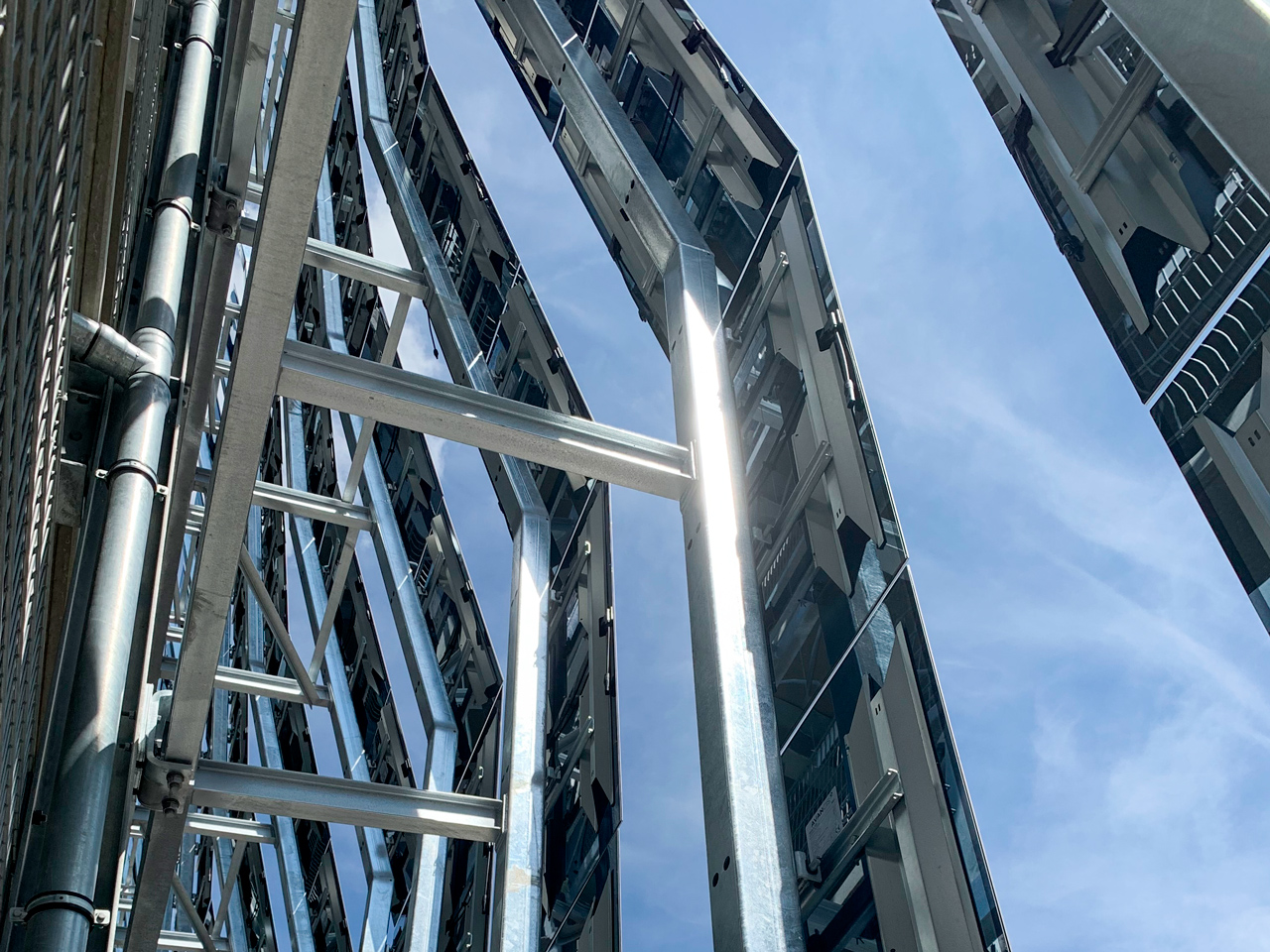
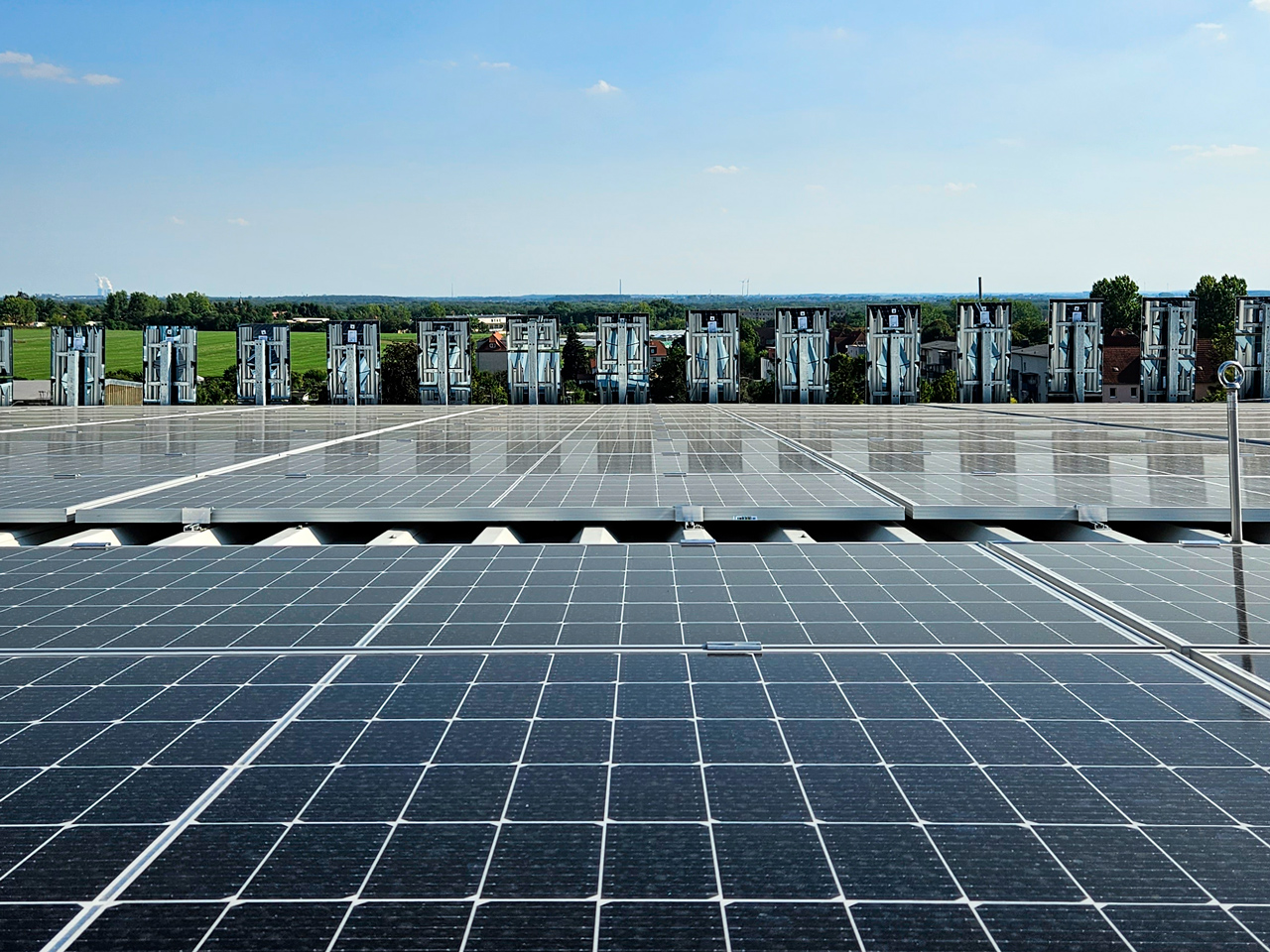
- PV modules supported by a 15 m high, up to 2 m cantilever steel substructure in 200 different sections
- The colour effect of the PV modules varies based on sunlight exposure and the observer’s viewing angle
We provided
Consultancy
Technical facade design develops an agreed facade solution into coordinated technical information for implementation.
- Details, components, connections and interfaces are brought together with requirements for construction, materials, building physics, acoustics, fire and safety.
- The required level of development depends on the project, procurement model and appointment.
- This creates a consistent basis for subsequent shop, production and installation planning.
- Technical facade design develops an agreed facade solution in sufficient detail for subsequent implementation.
- Depending on the appointment, Priedemann develops principle details, connections, layers, components, materials and dimensions, and coordinates interfaces with adjacent construction.
- Structural, building-physics, acoustic, fire and safety requirements are considered to the agreed design depth.
- The result is coordinated design information that can provide a basis for shop, production and installation drawings.
- The precise scope is defined for each project.
The supervision of assembly and installation is particularly important for us, to ensure the agreed quality. Our principle is that deviations from the agreed planning must be identified at an early stage, documented and the implementation corrected. This controlling refers both to production and manufacturing as well as to the assembly on the building site:
Regular inspection of production and assembly in the factory- Verification of compliance with the approved design, ensuring compliance with the agreed qualities, standards and test series
- Regular reporting on production progress; the reports contain recommendations for possible improvements as well as a list of unfulfilled services, performance arrears, defects identified
- Verification of compliance with the approved design, ensuring compliance with the agreed qualities, standards and test series
- Inspection of examples of facade sections as reference values for determining the quality of workmanship – benchmark inspections
- Involvement in performance tests on the facade on the building site (water impermeability, sound insulation, blower door test, etc.)
- Random inspection of the installation work on the building site
- Regular reporting on the installation work including the identification of discrepancies with the original planning
Engineering
Facade system development translates an identifiable design direction and defined project requirements into a coherent technical facade approach.
- Priedemann develops system types, elements, principle details and interfaces and adapts existing systems to the project where required.
- Structural, fabrication and installation conditions are considered as part of that development.
- The result is a robust technical direction for subsequent technical design, shop drawings and production planning.
- Priedemann develops facade systems and technical concepts from an agreed design direction.
- The work considers system build-up, materials, principle details, interfaces, performance requirements, and conditions for production, transport and installation.
- Existing systems may be adapted or project-specific solutions developed and compared against clear criteria.
- The outcome defines the technical system approach and provides a robust basis for subsequent technical design, shop drawings and production planning.
Specials
Priedemann develops concepts for facade-integrated solar energy: heat, electricity, and solar cooling.
- Facade surfaces are often larger than roof surfaces, offering additional potential for renewable energy sources.
- Priedemann determines the energy demand, evaluates the potential based on local weather data, building location and orientation, and develops concepts and solutions together with the specialists involved.
- Priedemann develops concepts for integrating solar-energy generation into the facade.
- Energy demand, building location, orientation, climate data and facade construction are used to assess the potential for generating heat or electricity.
- Possible systems are incorporated into the technical and architectural facade concept and coordinated with the relevant disciplines.
- The findings support subsequent design.
- Yield assessment, electrical design and grid connection are addressed only where expressly included in the appointment.
Priedemann creates, analyses and optimises digital 3D models as a technical basis for further facade design and subsequent fabrication.
- Architectural surface or node models are translated into realistic solid models.
- This makes it possible to identify details that would be particularly challenging to build or could not be realised with available systems and products.
- Models can also be adjusted to bring fabrication requirements and architectural intent into better alignment.
- Priedemann analyses three-dimensional facade models and develops them for further technical work.
- Surface or node models are translated into realistic solid models and detailed so that relevant components, connections and geometric relationships can be assessed.
- Priedemann identifies details that are technically challenging or could not be realised with tested systems and approved products.
- The software and level of development depend on the project.
Parametric facade models make it easier to respond consistently when design conditions change. Priedemann constructs components, elements or complete assemblies in 3D and connects their geometry through defined rules and relationships. Parametric design can form part of a BIM process or be used as a separate design and production method. The models can generate CIM- and DFM-compatible data sets for further development.
Priedemann uses parametric modelling to develop variable facade geometry, components or assemblies through defined rules and relationships. This allows options to be generated consistently, reviewed and adapted when inputs change.
Depending on the brief, geometry, component information or machine-readable data can be derived for subsequent design and fabrication. Parameters, software, outputs and responsibility for downstream production data are agreed for the project.
From parametric model to fabrication
Parametric models can support more than geometric design. Depending on the task and agreed workflow, the resulting data can be transferred into subsequent design or fabrication processes. This may include CIM- and DFM-compatible data and further processing into CNC data. For complex facade geometry in particular, the rule-based model structure allows changes to be carried through consistently and information to continue from design into later planning and production stages.
Memberships