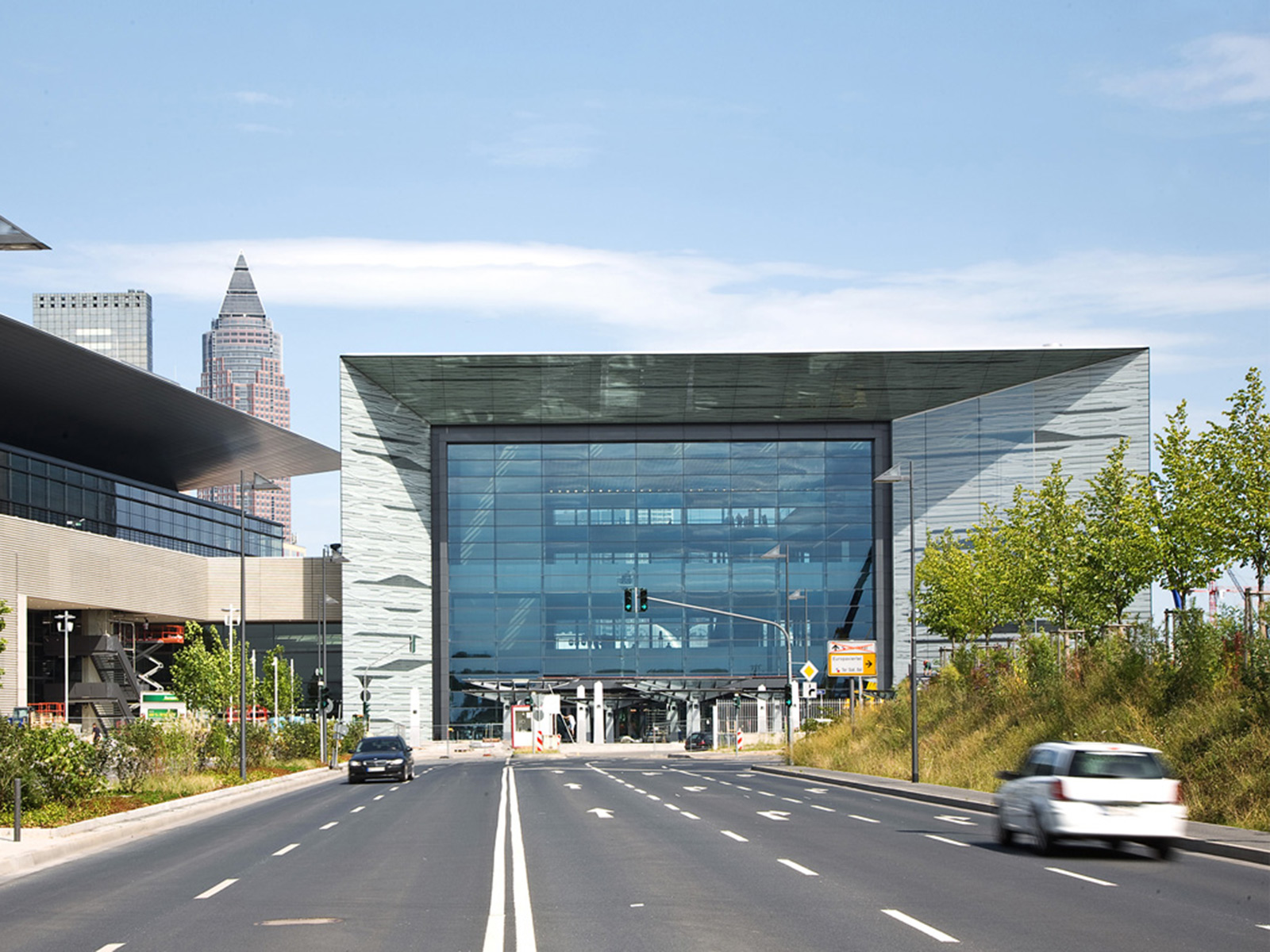
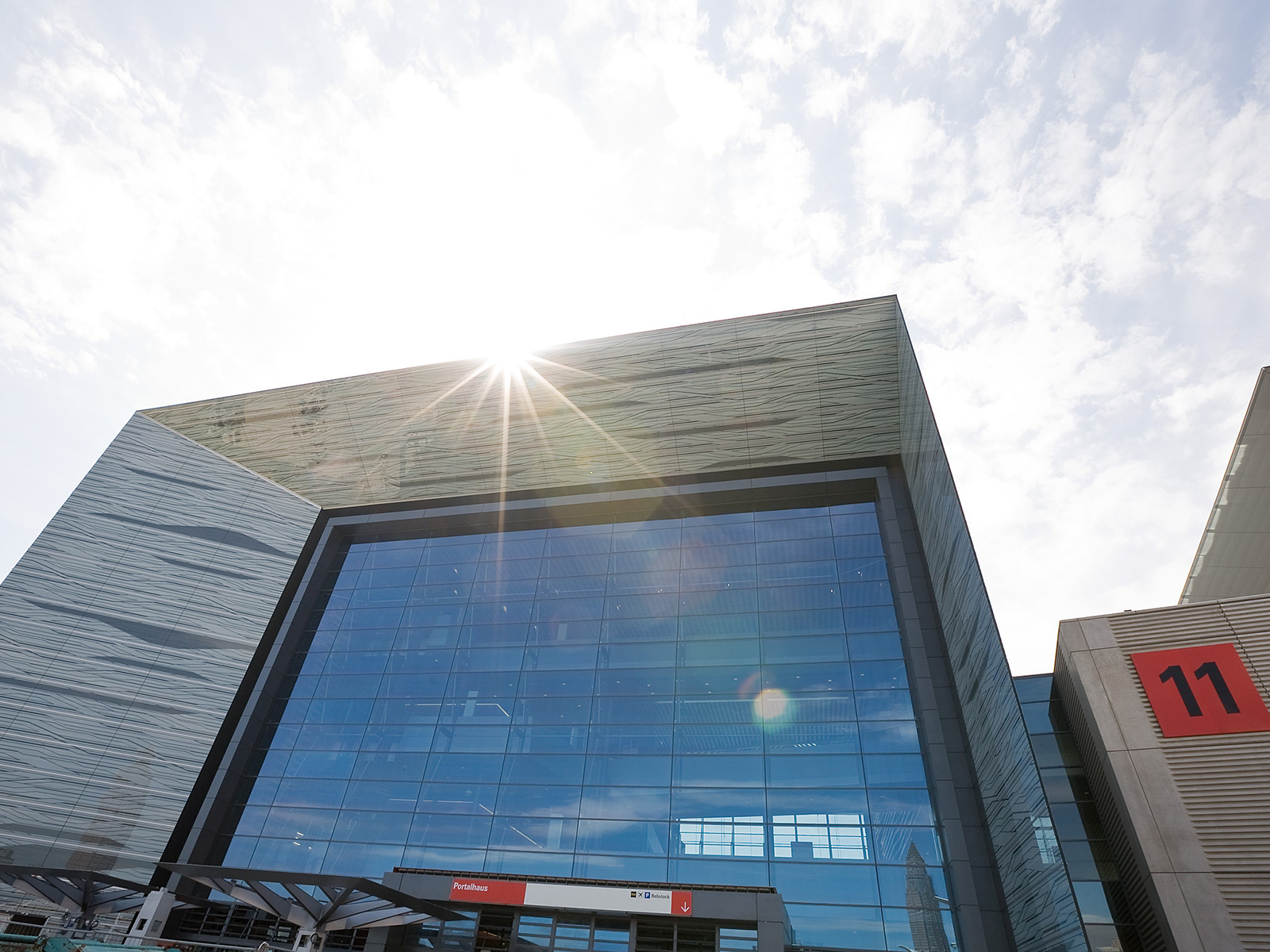
Trade Fair Hall 11 and Portalhaus, Frankfurt
Messe Frankfurt Venue GmbH & Co.KG
Owner / Developer
Messe Frankfurt Venue GmbH & Co.KG
Architect
Hascher Jehle Architektur
Building Function
Exhibition Building
Status
Completed 08/2009
approx. 73.000 m²
Height
approx. 30 m
Technical Features
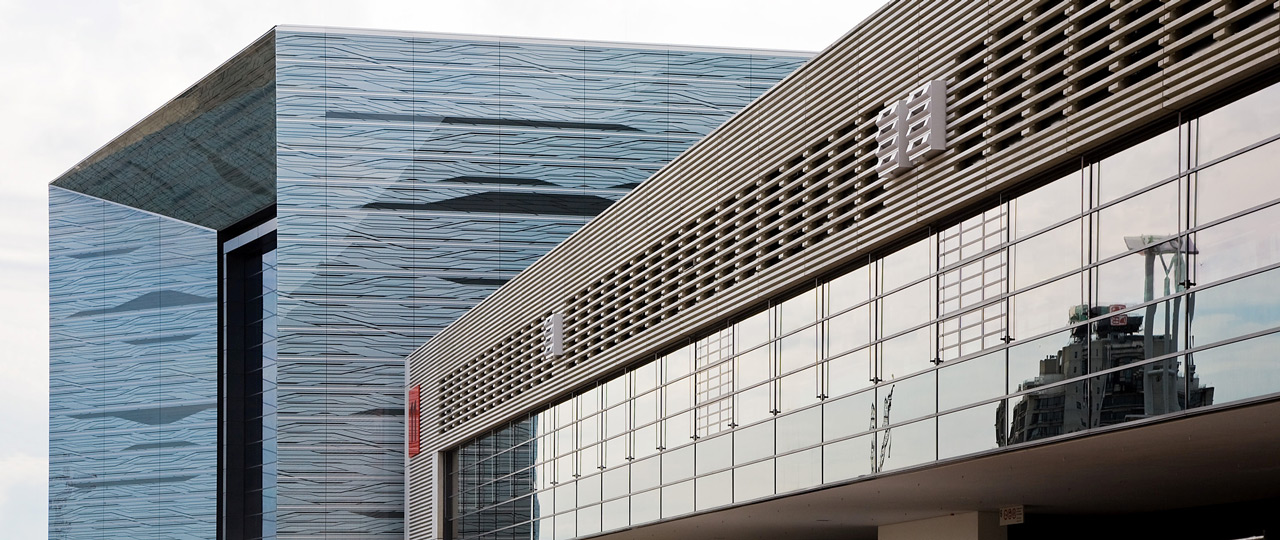
- Stick system facade
- Rain screen
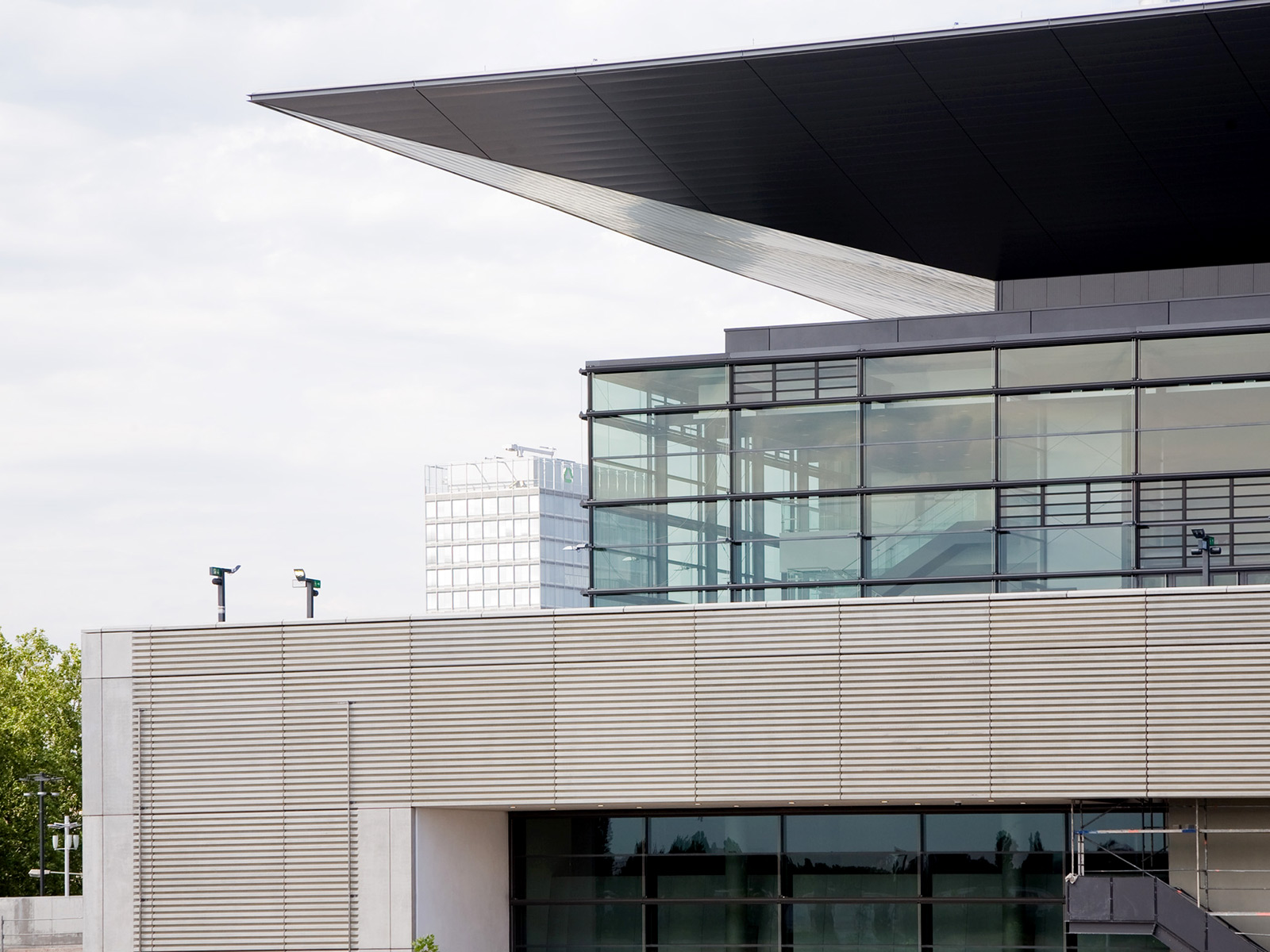
- Aluminium cladding
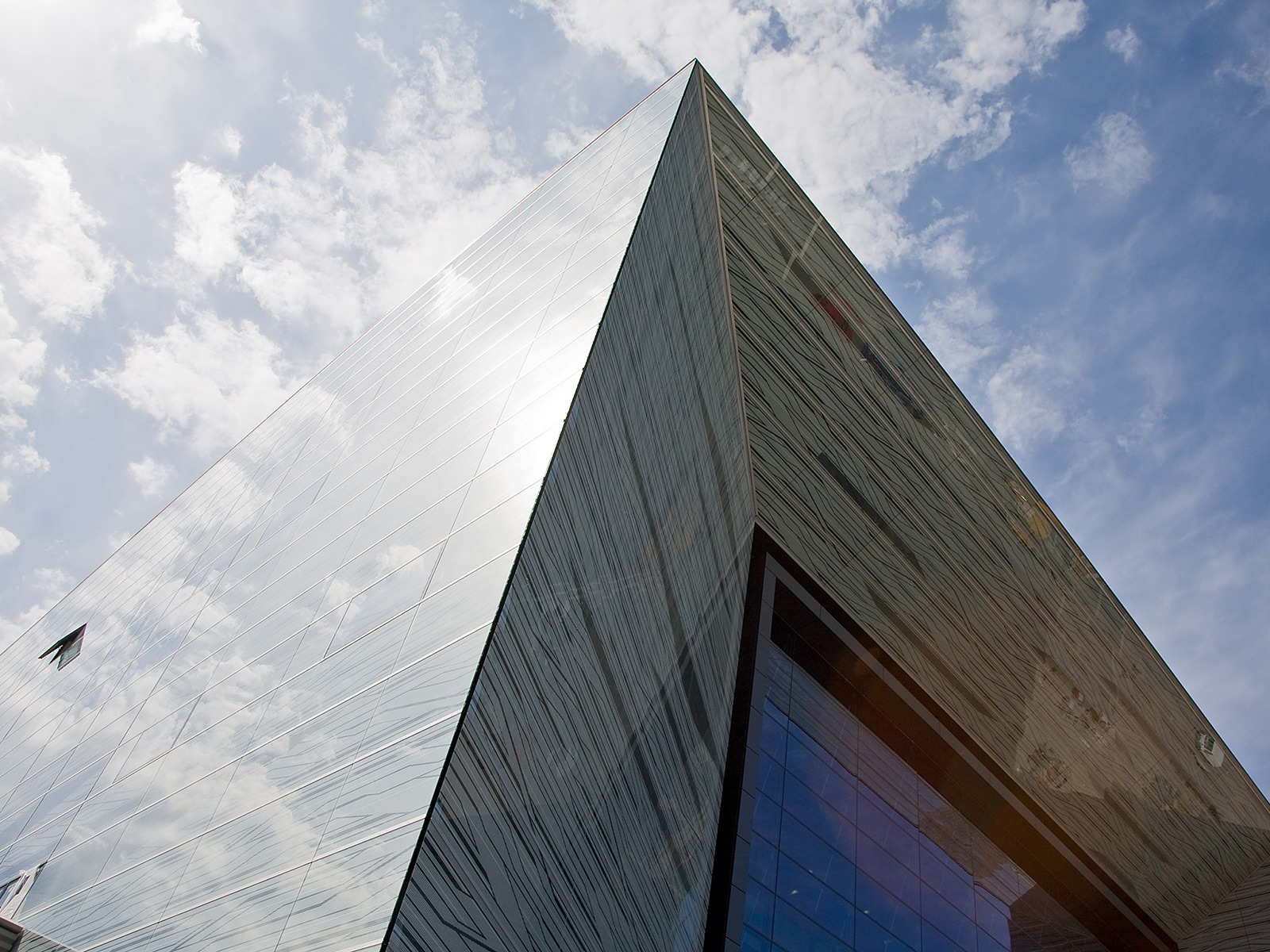
- Silk screen printings
- Lamella facade
- Precast reinforced concrete units
We provided
Consultancy
Sound facade decisions start with a clear understanding of the project’s starting point.
- Priedemann organises the available project information, design intent, use, and facade-related technical and external requirements.
- Together with the project participants, objectives, priorities, constraints and unresolved questions are made visible.
- This creates a reliable basis for the next design steps and for decisions before the facade concept is developed in greater detail.
- Priedemann identifies and structures the project information, requirements, objectives and constraints relevant to facade planning.
- These may include design intent, use, technical and energy-related requirements, local conditions, and quality, cost and programme objectives.
- Unresolved questions, dependencies and competing priorities are made explicit and translated into clear decision criteria.
- This creates a reliable basis for early facade design and subsequent planning.
- The subjects reviewed and documented depend on the project stage and agreed scope.
Decision criteria and priorities
- Not every facade requirement has the same priority within a project.
- Design intent, use, technical requirements, local conditions, quality, cost and programme objectives can influence one another.
- Establishing the project basis therefore also means structuring these requirements and making potential conflicts visible.
- The resulting criteria provide a shared basis against which later options and decisions can be assessed consistently.
Facade design for statutory approval develops an existing facade concept for the project’s approval and coordination context.
- Priedemann brings together available design information, technical requirements, materials, facade types and interfaces.
- Depending on the project, fire, safety, building-physics and acoustic requirements are also considered.
- The result is a clear facade basis for coordination with the relevant disciplines and for subsequent design.
- Facade design for statutory approval develops the facade information needed to demonstrate relevant approval requirements.
- Depending on the appointment, Priedemann addresses technical facade subjects, interfaces, fire and safety requirements, and the necessary design information.
- Unresolved points are coordinated with the relevant disciplines and technical contributions are documented.
- The scope, submission process and responsibility for the complete statutory application are agreed for the project.
Technical facade design develops an agreed facade solution into coordinated technical information for implementation.
- Details, components, connections and interfaces are brought together with requirements for construction, materials, building physics, acoustics, fire and safety.
- The required level of development depends on the project, procurement model and appointment.
- This creates a consistent basis for subsequent shop, production and installation planning.
- Technical facade design develops an agreed facade solution in sufficient detail for subsequent implementation.
- Depending on the appointment, Priedemann develops principle details, connections, layers, components, materials and dimensions, and coordinates interfaces with adjacent construction.
- Structural, building-physics, acoustic, fire and safety requirements are considered to the agreed design depth.
- The result is coordinated design information that can provide a basis for shop, production and installation drawings.
- The precise scope is defined for each project.
After a facade manufacturer is appointed, Priedemann reviews its shop drawings, system planning and technical submittals against the agreed design basis.
- This includes comparison with project changes, assessment of structural assumptions and energy/acoustic performance values, and review of technical data sheets for materials and components.
- Priedemann comments on discrepancies and coordinates change management as the facade contact point for the planning team.
- Priedemann reviews the contractor’s shop-drawing information against the agreed requirements and released design basis.
- Depending on the appointment, the review covers system components, details, interfaces, technical assumptions, materials and relevant performance data.
- Deviations and unresolved questions are documented and coordinated with the design team.
- In this way, the review supports technical quality assurance and makes required decisions visible early.
The supervision of assembly and installation is particularly important for us, to ensure the agreed quality. Our principle is that deviations from the agreed planning must be identified at an early stage, documented and the implementation corrected. This controlling refers both to production and manufacturing as well as to the assembly on the building site:
Regular inspection of production and assembly in the factory- Verification of compliance with the approved design, ensuring compliance with the agreed qualities, standards and test series
- Regular reporting on production progress; the reports contain recommendations for possible improvements as well as a list of unfulfilled services, performance arrears, defects identified
- Verification of compliance with the approved design, ensuring compliance with the agreed qualities, standards and test series
- Inspection of examples of facade sections as reference values for determining the quality of workmanship – benchmark inspections
- Involvement in performance tests on the facade on the building site (water impermeability, sound insulation, blower door test, etc.)
- Random inspection of the installation work on the building site
- Regular reporting on the installation work including the identification of discrepancies with the original planning
Specials
Thermal building physics connects the facade build-up with the building’s energy and building-physics requirements.
- Priedemann investigates thermal protection, glazing, solar control, insulation, thermal bridges and condensation risk.
- Relevant performance values and material build-ups are determined from local and project-specific requirements.
- Where commissioned, values from the facade and building services also contribute to the overall energy balance of the building.
- Priedemann assesses the thermal performance of facades and develops suitable component and layer build-ups.
- This can include calculating U-values and g-values, insulation thicknesses, isotherms, two- or three-dimensional thermal bridges, surface temperatures and condensation risk.
- Depending on the appointment, component catalogues are prepared and values from the facade and building services are combined for the building’s overall energy balance.
- The findings support decisions on thermal protection, materials, glazing, solar control and technical detailing.
Facade performance and building energy
- Thermal assessment does not always stop at an individual facade component.
- Depending on the appointment, values from the facade and building services can be combined when considering the building’s overall energy balance.
- Isotherms, thermal-bridge calculations and surface temperatures can also show where construction details become critical and where condensation risk may arise.
- Thermal building physics therefore connects individual material and detailing decisions with the wider energy performance of the building
Priedemann uses computer-based simulation where standardised calculation methods are no longer sufficient. This covers room-comfort simulation based on ISO 7730 together with heating and cooling loads, and, for complex systems, three-dimensional computational fluid dynamics (CFD) simulation, including sizing smoke-extraction openings. The aim is a reliable basis for concrete design decisions on critical rooms and systems.
Priedemann uses thermal and airflow simulations to investigate the behaviour of the facade, interior and building services under defined conditions. Input data for the building, use, climate and technical systems are translated into coordinated models. Depending on the brief, the analysis considers room temperatures, comfort, heating and cooling loads, airflow or temperature distribution.
Critical areas and the implications of possible options become visible. The findings support design decisions but do not replace measurement of the completed building in operation.
What simulation outputs can show
Simulation can provide more than a single performance value. Depending on the model, the analysis can consider room-air temperatures, thermal comfort, heating and cooling loads, airflow velocities and temperature distributions in the air or at surfaces. CFD simulation can also be used for defined smoke-extraction scenarios and to examine smoke-extraction or make-up-air openings. The important limitation is that every result applies to the assumptions and boundary conditions defined for that particular model.
Memberships